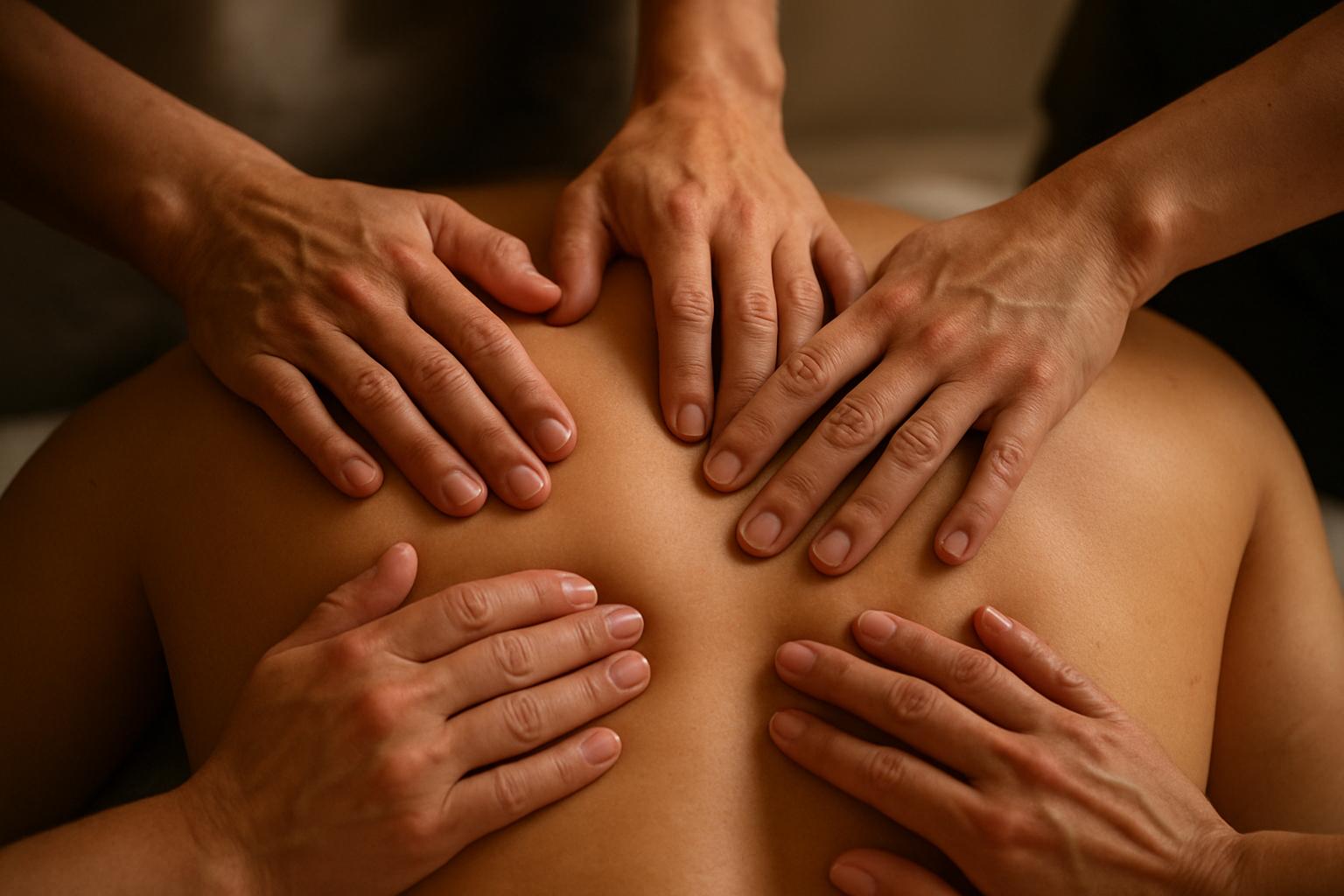

If you’ve walked past spas in Manhattan and noticed the option for a four-hands massage, you may have wondered whether it’s worth booking. The idea of two therapists working in concert on one body can sound luxurious, intimidating, or downright mysterious. This guide walks you through everything from how the technique feels to what to expect when you book in a Midtown or West Village studio.
Manhattan’s pace makes the promise of synchronized hands especially appealing: a single session that can feel more immersive and faster in producing relaxation than a standard massage. Read on for practical tips, safety notes, pricing pointers, and a clear sense of how to choose the right place for your first double-therapist experience.
What Is a Four-Hands Massage?
A four-hands massage is exactly what it sounds like: two trained massage therapists working on one person at the same time. Each therapist coordinates their movements so that pressure, rhythm, and techniques mirror or complement one another, creating a layered, enveloping sensation.
Sessions vary in style. Sometimes the therapists mirror each other’s hands exactly; other times they take complementary roles—one focusing on broader strokes while the other attends to specific knots. Regardless of method, the goal is synchronized treatment that enhances relaxation and therapeutic effectiveness.
History and Origins
The four-hands technique has roots in traditional therapeutic practices and luxury spa offerings that emphasize an elevated sensory experience. It evolved from the idea that doubling touch can multiply relaxation and the physiological benefits of massage—improving circulation, reducing muscle tension, and modulating heart rate and respiration.
Over time, high-end spas and wellness centers popularized the treatment as a signature service. Today, both boutique studios and large hotel spas in Manhattan offer four-hands sessions, often incorporating modalities such as Swedish, deep tissue, aromatherapy, or hot stone elements to suit client goals.
Benefits of a Four-Hands Massage
A session with two therapists can produce sensations and outcomes that are different from a single-therapist massage. Clients often report a deeper sense of surrender to the experience, and therapists can cover more body area simultaneously—useful for balancing tension across the shoulders, back, and hips.
The synchronized work can also create rhythmic patterns that encourage the nervous system to shift into parasympathetic (rest-and-digest) mode more quickly than with conventional massage. That may mean faster stress reduction, deeper sleep after the session, and a more pronounced sense of calm.
- Enhanced relaxation through symmetry and rhythm
- Potential for faster reduction of muscle tension
- Greater subjective feeling of being ‘held’ or supported
- Opportunity for a more ceremonial or luxurious spa experience
Beyond immediate relaxation, a well-delivered four-hands massage may help with circulation and lymphatic flow. Two therapists can work in coordinated sequences that promote drainage and reduce stiffness, especially on areas like the upper back and gluteal region where tension accumulates for many city dwellers.
Physical Benefits
On a physical level, the doubled attention can reach multiple focal points simultaneously, reducing compensatory tension patterns. For example, while one therapist works to release the upper trapezius, the other can address compensatory tightness in the rhomboids or lower back.
This simultaneous approach can also mean more efficient coverage of the body in a given time frame, which is helpful if you have limited time but want broad relief. Sports and therapeutic massage therapists sometimes use elements of four-hands work to balance muscular asymmetries quickly.
Mental and Emotional Benefits
Psychologically, synchronized touch feels different. Many people describe a four-hands session as more enveloping—like being cradled from both sides. That sensation can reduce anxiety and create a sense of being fully cared for, which supports emotional regulation.
Because the experience requires a degree of trust—two therapists in close proximity—clients often report that the session fosters a strong mind-body connection. The intensity and novelty of the experience can also make it memorable and reset your perception of relaxation after only one visit.
How a Typical Session Unfolds in Manhattan Spas
Although each spa has its own signature, most four-hands sessions follow a similar rhythm: consultation, setup, synchronized work, and focused finishing techniques. The intake will cover health history, areas of concern, and pressure preferences before you lie down.
Therapists usually discuss who will lead the contact—sometimes they assign one therapist to guide technique and the other to follow; sometimes they plan mirror patterns. Communication between the therapists and with you is essential to keep pressure appropriate and to adjust the flow as needed.
- Pre-session consultation: health check and goal-setting.
- Preparation: linens, oils, and positioning—often side-by-side or slightly offset.
- Initial synchronized strokes to establish rhythm and check pressure.
- Targeted work: alternating focus on shoulders, back, legs, or problem areas.
- Closing sequence to restore balance and ease transitions back to waking.
Typical sessions last 60 to 90 minutes, though shorter or longer options are common. Some Manhattan spas offer add-ons—aromatherapy, scalp treatments, or reflexology—so you can customize the experience if you prefer one therapist to emphasize a particular area.
Choosing the Right Spa in Manhattan
Manhattan has a wide range of options: hotel resort-style spas, intimate boutique studios, and therapeutic clinics. Your choice should hinge on your goals. If you want pure relaxation and atmosphere, a luxury hotel spa may appeal. If you want a therapeutic approach focused on specific pain, a licensed clinic with massage therapists who specialize in structural work might be better.
Consider therapist qualifications. Look for licensed massage therapists (LMTs) or state-licensed practitioners who list experience with multi-therapist techniques. Reviews can give a sense of how well teams coordinate and whether clients found the pressure and flow appropriate.
| Neighborhood/Type | Typical Price Range | Duration Options | Notes |
|---|---|---|---|
| Luxury Midtown Spa | $250–$450 | 60, 90, 120 minutes | High-end amenities, extended relaxation lounges, recommended for a special occasion |
| Boutique West Village Studio | $160–$300 | 60, 75, 90 minutes | More intimate, personalized treatment plans, strong focus on therapist-client rapport |
| Therapeutic Clinic (Chelsea/Union Sq) | $140–$280 | 45, 60, 90 minutes | Clinical focus, great for pain management and postural work |
| Hotel Spa (SoHo/Lower Manhattan) | $200–$400 | 60, 90 minutes | Convenient for travelers, adds luxury amenities but may be busier |
Prices vary with time of day, therapist experience, and the inclusion of amenities like steam rooms or relaxation lounges. If cost is a consideration, check for midweek discounts or package rates that reduce the per-session price.
Questions to Ask Before Booking
Asking the right questions can save you from an uncomfortable experience. Call or read the spa’s online FAQs to learn about therapist pairing, pressure styles, and privacy policies. A short conversation will reveal how well the team communicates about expectations.
- Are both therapists licensed and experienced in four-hands work?
- How do you coordinate pressure and technique between two therapists?
- Can I request a particular focus area or adjust pressure during the session?
- What is your cancellation and late-arrival policy?
Some clients want a specific gender arrangement for therapists or prefer that both therapists be the same gender. If that matters to you, ask in advance—many spas will honor such requests when possible.
Cost, Time, and Etiquette
Four-hands sessions are usually priced higher than single-therapist treatments because two professionals are involved. Expect to pay roughly double the cost of a one-therapist session, though many spas price their double-therapist packages competitively to attract bookings.
Timing matters. Arrive 10–15 minutes early to complete intake and relax briefly. Come prepared to discuss areas of pain, your comfort with pressure, and any medical conditions. If you need to reschedule, try to give at least 24 hours’ notice; spa policies vary, and late cancellations often incur fees.
- Tipping: Standard etiquette in Manhattan is to tip 15–20% of the service price. If you received exceptional care, consider tipping a bit more.
- Privacy: Communicate draping preferences clearly; professionals know how to provide effective treatment while maintaining modesty.
- Communication: Use simple signals (a raised hand or verbal cue) to indicate pressure adjustments—therapists will pause and accommodate.
While it’s courteous to acknowledge both therapists, spas typically handle a single tip split between them, or you can tip each therapist individually if you prefer. Ask the front desk how tips are processed to avoid confusion.
Preparing for Your Session and Aftercare
Preparation is simple and focused on comfort. Wear light clothing to the spa, avoid heavy meals immediately before your session, and skip alcohol if you want to maximize therapeutic benefits. Hydrating well in the hours before your appointment helps circulation and recovery.
During intake, be honest about injuries, recent surgeries, allergies to oils, or any chronic conditions. If you are pregnant, discuss prenatal massage options; many spas have special four-hands adaptations for expectant clients, but not all do.
- Hydrate before and after your session to support circulation and toxin clearance.
- Avoid strenuous exercise immediately after a deep session to give muscles time to reset.
- Apply heat or gentle stretching the next day if you feel residual stiffness—this can enhance the benefits.
Aftercare matters. Plan a relaxed schedule post-massage if possible: a tense commute or a stressful meeting can blunt the calming effects. Many Manhattan spas offer relaxation lounges—consider lingering for a short period to extend the calm before re-entering the city’s energy.
Who Should Avoid Four-Hands Massage and Safety Considerations
Four-hands massage is generally safe for healthy adults, but it may not be appropriate for everyone. If you have certain medical conditions—deep vein thrombosis, uncontrolled hypertension, infections, or recent surgeries—skip or modify the treatment until you have medical clearance.
Communicate openly about medications and health issues. Blood thinners, cancer treatments, and certain skin conditions call for extra caution. Licensed therapists will adapt pressure, avoid contraindicated areas, or recommend alternative modalities.
- Avoid intense deep-tissue work if you have fragile skin or open wounds.
- Discuss pregnancy with staff; prenatal adaptations are sometimes available but require trained therapists.
- Stop the session immediately if you feel sharp pain, dizziness, or nausea.
Trust your body. The novelty of two therapists can be disorienting at first; ask therapists to slow the pace or reduce pressure. They are trained to respond and will modify techniques to ensure your comfort and safety.
Four-Hands vs. Couples Massage: What’s the Difference?
People often confuse a four-hands massage with a couples massage, but they serve different purposes. A couples massage involves two people receiving single-therapist treatments side-by-side—perfect for sharing an experience with a friend or partner. A four-hands massage focuses on one person with two therapists working together.
The primary difference is the intensity and coordination of hands on one body versus two separate treatments. Choose a couples massage if you want to share the time and talk quietly with a companion. Choose a four-hands session if you want a more immersive, concentrated therapeutic experience.
- Couples massage: side-by-side, two separate single-therapist treatments, shared experience.
- Four-hands massage: one person receives treatment from two therapists simultaneously, synchronized technique.
Tips for First-Timers in Manhattan
If this will be your first four-hands session, plan for a little extra time and give yourself permission to relax fully. Manhattan’s spas range in atmosphere; some are quiet and hushed, while others blend luxury with modern design. Choose a place where you feel comfortable and where staff communicate clearly.
During the session, focus on breathing and let your body guide requests for adjustments. The therapists will check in, but small nonverbal cues help maintain the flow. People new to the modality sometimes prefer the therapists to mirror each other exactly—if that sounds appealing, say so during intake.
- Book midweek or off-peak hours if you prefer a quieter environment.
- Request therapists with good coordination or specific experience in four-hands work.
- Keep an open mind: the sensation may be novel, but it can quickly become profoundly relaxing.
- Plan your commute and post-session activities to avoid rushing out immediately.
If you have a specific goal—like easing chronic shoulder tension or aiding recovery after travel—mention it early. Skilled teams will tailor techniques and timing to balance broad relaxation with targeted therapeutic work.
Frequently Asked Practical Questions
It helps to know a few practical details before you call to book. For example: how much should you tip? How do therapists coordinate? What should you wear? Answering these small logistics in advance removes friction and lets you focus on the experience.
Most spas allow you to remain draped with towels and sheets; therapists uncover only the area they are working on. If you have modesty concerns, state them up front—therapists will respect your boundaries and adjust the sequence to minimize exposure of sensitive areas.
- What if I need a specific pressure level? Speak up at intake and again at the start of the session.
- Can both therapists be the same gender? Many spas accommodate such requests—ask when booking.
- Are aromatherapy oils used? You can usually opt in or out depending on scent sensitivity.
- How do tips get split? Check with the front desk; some spas divide tips evenly, others allow individual tipping.
Finally, remember that communication is the single best tool for a great session. Therapists cannot read minds; a simple «lighter» or «a bit firmer» will improve the experience immediately.
Conclusion
A four-hands massage in Manhattan can be a profound, efficient way to reset—physically and mentally—when you choose the right spa and communicate your needs. Whether you prioritize clinical results, pure relaxation, or a memorable splurge, this modality offers a unique, enveloping form of care worth trying at least once.